The Great Debt Ceiling Debate – Part 3

This is part 3 of a multi-part series on the “great debt ceiling debate” written as an accompaniment to our radio show broadcast and podcast, “Raising the Roof – How the Great Debt Ceiling Debate Impacts You”.  You can download the episode on iTunes or find it on our Listen page.

In our last installment, we explored the bond market and how interest rates are established in the open market.  Bonds are debts and the interest rates are set by risk, reward, supply and demand.  Now we will explore how the Federal Reserve Bank affects interest rates.  You should already know how interest rates affect you. ;-)

How the Fed Influences Interest Rates

The Federal Reserve

The Federal Reserve Bank (the Fed) is the bank of the Treasury.  The Treasury is the government.  The Federal Reserve is NOT the government.  If you want to learn more about the Fed, we highly recommend reading The Creature from Jekyll Island, which is conveniently located in The Real Estate Guys™ Recommended Reading area.

The Magic Checkbook

For now, you only need to know that the Fed can write checks on itself that will not bounce.  In other words, it doesn’t need money.  It creates money simply by writing a check.  That may sound unbelievable, but for now, just take our word for it.  This isn’t an expose on the Fed, so you can look it up in your spare time.

Now that we know how the Fed’s magic checkbook works, let’s imagine that Uncle Sam shows up to hold a Treasury bond auction.  But there isn’t enough demand, so interest rates start to go up.  In prior installments, we discussed what happens to the value of all the existing debt out there when interest rates go up (it goes down), but to toss in some extra motivation for the Fed, the current Fed leadership believes that low interest rates stimulates borrowing, which stimulates spending, which stimulates production, which stimulates hiring.  This is a “Keynesian” view of economics.  That is, that borrowing and spending is the key to growth and job creation (how’s that working out so far?).

Side note: For an opposing viewpoint, may we recommend you look into “Austrian” economic theory, which puts forth the idea that one must actually produce before one can consume or borrow, and that production and savings are the keys to economic growth.  In other words, in its most rudimentary terms, before you can eat, you need to grow or hunt food.  And if you have more food than you need, then you have something of value to trade with.  If you don’t have anything to eat and nothing of value to trade with, you need to either beg, borrow or steal from someone who actually does produce.  And the only way to have trading partners is if they produce more than they consume, so there’s something extra for you to trade for.  The bottom line is that production, not spending, is the key to prosperity. That’s why printing money or stimulating consumption doesn’t create jobs.  And as real estate investors, we want to invest where jobs are being created.  Because unless you’re renting to people subsidized by the government, your best tenants will need jobs to pay you rent. Now, back to our main feature….

Now if you, like Big Ben Bernanke, believe that borrowing is the key to prosperity, where do you think interest rates need to be?  Hint: LOW interest rates attract borrowers.  Sorry, was that hint TOO obvious?

Let’s get back to our Treasury auction.  Uncle Sam is there holding his bonds out for sale, but not enough buyers show up. So Uncle Sam has to start lowering his price (increasing the yield) and interest rates start going up.  Big Ben thinks this is bad.  So he gets out his Magic Checkbook and buys, say $600 billion of Uncle Sam’s bonds (does the term QE2 some to mind?), to help create some extra demand.  Shazam! Interest rates stay low.

Well, if you’re a government addicted to debt, deficits and spending, this makes you very happy.  Just like when the interest rate on your growing credit card balance stays low.  With low interest rates, you can borrow more for the same payments.  No need to cut spending. Let the good times roll!  The only thing better than low interest rates is an increase in your credit line (isn’t there some discussion about that?)

To summarize, when the Fed buys Uncle Sam’s Treasury bonds in the open market, the extra demand drives the bond prices up and their yields (interest rates) down.  Then, the ripple effect of interest rate pricing kicks in, as all riskier debt pivots off the interest rate of Uncle Sam’s “safest debt in the world”.  That is, if Treasuries pay x, then a riskier debt pays x plus a little bit more (usually denominated in “basis points”, which are 1/100 of a percentage. So 25 basis points is 1/4 of 1% or .25).  The farther away you move up the risk scale, the more expensive the debt is for the borrower.  This is why everyone has their undies in a bunch over Uncle Sam’s credit rating.  It he loses his coveted super-duper AAA rating, then interest rates go up….and Big Ben may need to step in with his Magic Checkbook.

But what happens when Big Ben uses his Magic Checkbook?  Are there any side effects we should be considering?  Hmmm….?  Inquiring minds want to know!

So join us next time, as we delve into How the Fed’s Purchase of Treasuries Affects the Money Supply.  Hint: “Trickle Down” isn’t just for supply-siders any more.

8/15/10: How Capitalism Will Save Us – An Interview with Steve Forbes

The Real Estate Guys™ sit down and talk with Steve Forbes about jobs, the economy and real estate.

We don’t know about you, but any time a billionaire, a CEO of a major company, a best selling author or a legit presidential candidate is willing to sit down and chat, our response is always, “Yes!”.   In this case, our special guest for this episode, Steve Forbes, is ALL of those things wrapped into one.  So we’re super jazzed to bring this exclusive interview to you.

In the broadcast booth at the Freedom Fest conference in Las Vegas:

  • Your Host and interviewer extraordinaire, Robert Helms
  • The just-happy-to-be-here Co-host, Russell Gray
  • Special guest, Forbes Magazine CEO, Steve Forbes

Mr. Forbes was the keynote speaker at the Freedom Fest conference and remained in attendance for the entire event.  In spite of a recent neck surgery, he was very accommodating and so Robert was able to sit down with Mr. Forbes for an impromptu interview.

Steve Forbes with Russ and Robert at Freedom Fest. Russ wrestled Steve into doing the interview, which broke Russ' glasses and injured Steve's neck. But the interview went well and we were all smiles afterwards.

We decided to ask him about his latest book, Why Capitalism Will Save Us – Why Free People and Free Markets are the Best Answer in Today’s Economy. Mr. Forbes’ thesis is that too much government is bad for business because it increases costs, diminishes productivity and takes too many resources away from creating jobs for an ever-growing population.  He calls for “sensible rules of the road” to provide a basic framework in which free people can conduct business.  Of course, the great debate is over what’s “sensible”.  His position is that less is more.

What we’re really interested in is jobs. Jobs are where our tenants get their rent money.  It’s where home buyers get the income stream to make the mortgage payments that prop up the property values that create passive equity.  Jobs are near the top of our due diligence check list when evaluating a market to invest in.  It’s one of the reasons we like Dallas right now.  Among U.S. markets, it’s doing pretty well.  Ironically, another great job market is Washington DC, but if there’s a changing of the guard over the next couple of elections, that could change.  But we digress…

So Mr. Forbes shares his thoughts on the economy, job creation and the role of government in real estate, specifically Fannie Mae and Freddie Mac.  In his position as the CEO and editor-in-chief of Forbes Magazine, he gets to talk with many of people who shape, interpret and respond to public policy.  We really enjoyed our time with him and hope you will too!

On a side note, Steve Forbes is the nicest billionaire we’ve ever interviewed.  Actually, he’s the only billionaire we’ve ever interviewed.  But he’s still a very nice guy.  So, if you’re a billionaire and want to come on the show and be nice to us, just give us a call.  Our door is always open. :-)

Listen Now
Don’t miss a show!  Subscribe to the Free Podcast
Want More?  Sign Up for The Real Estate Guys™ Free Newsletter!

8/8/10: Don’t Say I Didn’t Warn You! Peter Schiff Reveals How He Predicted the Crash

WHO KNEW the crash was coming? Lots of people have been reverse engineering the causes of the financial crisis.  It’s easy(er) to be smart when operating from hindsight.  But when someone gets it right for the right reasons BEFORE the event occurs…well, that’s just impressive.

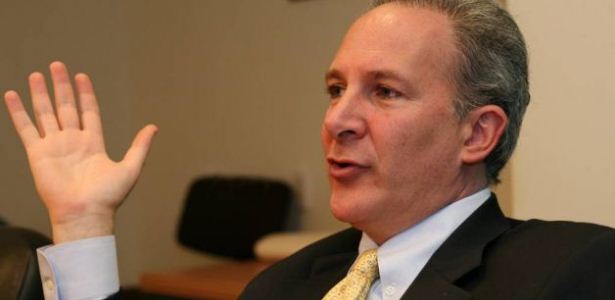
Peter Schiff is one of the few guys who called it way in advance. Not only that, but he put it in writing in his 2006 book Crash Proof (the updated version Crash Proof 2.0 is now on our recommended reading list).

Even more impressive is that Schiff appeared on a whole host of TV shows sounding the warning.  But people literally LAUGHED at him, as you’ll see in the 10 minute video below.  And there are many other videos of Peter aggressively debating all kinds of people – including next week’s guest on The Real Estate Guys™ Radio Show, Steve Forbes.

Featured on this week’s episode:

  • Your host, Robert Helms
  • Co-host, Russell Gray
  • Fund manager, economist, author and outspoken commentator, Peter Schiff

Politics aside (Schiff is running for the Republican nomination for Senate in Connecticut -  with the endorsement of Steve Forbes!), considering what Peter predicted and what actually happened,  how can you not be at least curious?   It was that curiosity that had us go to Las Vegas for Freedom Fest in July, where we were exposed to many economists who follow the Austrian school of thought.  There isn’t any way in a blog post to explain all we learned, but a recommended homework assignment is to review the major tenets of the Austrian viewpoint versus Keynesian.  We think you’ll find it very interesting, if not highly enlightening!

What we’re really interested in is being able to best anticipate macroeconomic influences that are likely to impact the value of our real estate, the strength of the jobs market, the growth of wages (which fuels growth in rents); and the cost and availability of loans.  We don’t care if you’re Democrat, Republican, Libertarian, fans of rap or a drinker of light beer (okay, we find the last one a little offensive) -if you have something to say that proves true and makes sense, we’re interested.  Peter Schiff is a guy that has proven true and seems to makes sense.

So for this entire show, we ask Peter to tell us to our face how he knew the crisis was coming and what’s going to happen next.  Based on his track record, we think he’s a guy worth listening to.  Check it out and let us know what YOU think!

The Real Estate Guys™ Radio Show provides ideas, perspectives and resources to help real estate investors succeed.

This podcast brought to you in part by Audible.com.  To download a FREE audiobook of your choice, click here.

Listen Now
Don’t miss a show!  Subscribe to the Free Podcast
Want More?  Sign Up for The Real Estate Guys™ Free Newsletter!