10/23/11: The Creature from Jekyll Island – A Conversation with G. Edward Griffin
As Halloween approaches, we wanted to pick a spooky topic to kick off the week. We’ll follow it up next with our annual edition of Halloween Horror Stories, so stay tuned!
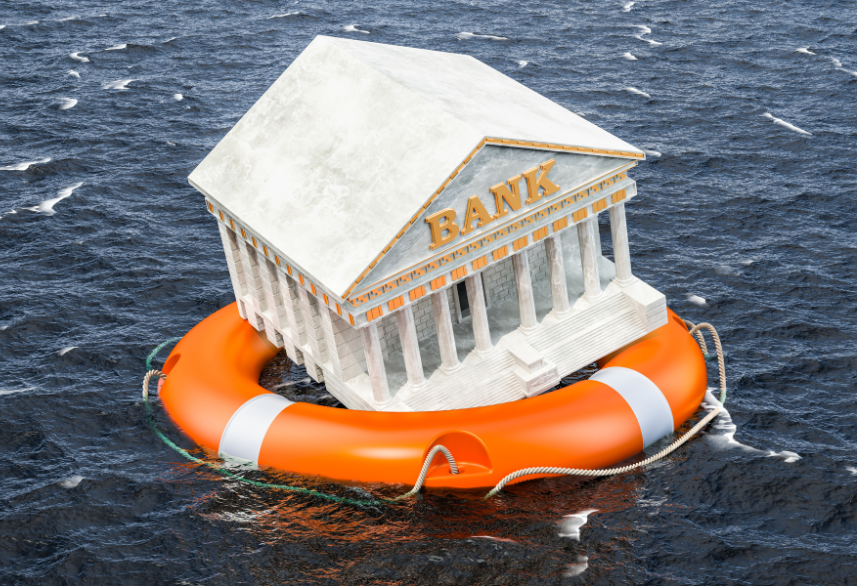
For this episode, our topic is The Creature from Jekyll Island. For the uninitiated, this is the title of the epic and iconic expose on the Federal Reserve by award winning documentary filmmaker G. Edward Griffin. And while it isn’t quite as entertaining as Rocky Horror Picture Show, it certainly has its own cult of rabid fans. However, like Rocky, Creature probably has more than it’s fair share of closet followers.
So when our good friend Robert Kiyosaki (who is no stranger himself to controversy) not only promoted, but endorsed The Creature from Jekyll Island, we thought we’d use the power of our press passes to get a face to face interview with the author.
Lurking around the microphones for a frightening discussion about the Federal Reserve:
- The mad scientist of radio magic, host Robert Helms
- His humpbacked henchman, co-host Russell Gray
- Documentary filmmaker, prolific author and outspoken critic of The Fed, G. Edward Griffin
Anthony J. D’Angelo says, “Your mind is like a parachute. It only works when it’s open.” How true! But this doesn’t mean that you should blindly accept everything you hear. However, it certainly encourages exposure to various points of view for further contemplation. In fact, that’s just how Griffin expanded some simple research for a speech on inflation into a seven year research project and one of the best known critiques of the Federal Reserve ever penned.
The Federal Reserve Bank is arguably the most powerful, non-governmental institution on the planet.
What’s that? You thought that “Federal” meant it was part of the government like the Treasury department? Not so. And that fact in and of itself isn’t even considered to be all that controversial! It’s widely acknowledged, even by Fed supporters like David Wessel, author of the New York Times bestseller In Fed We Trust, that the Fed is NOT an official part of the U.S. government.
So what’s the big deal about the Fed and why should a real estate investor pay attention?
First. the Fed controls the money supply of the (for now) world’s largest economy. It has a profound impact on interest rates and inflation – two topics which all real estate investors hold near and dear. Plus, the Fed has tremendous authority over ALL banks in the USA, even the little commercial ones in the flat middle states. And if all that power wasn’t enough, because the U.S. dollar serves as the reserve currency of the world, the Fed and its policies also profoundly affect global trade and currency exchange rates.
Yeah, the Fed’s a pretty big deal.
It’s no wonder then, that as the 2012 elections approach and so much emphasis is on the economy, that the topic of the Federal Reserve has made its way into the mainstream of presidential debates.
Ron Paul wants to End the Fed (the title of his book). Rick Perry has publicly denounced the Fed’s activities as “treasonous” and the last time we looked, “treason” was a pretty egregious crime. Although politicians are often guilty of putting their feet in their mouths, we’re guessing that wasn’t a comment Perry made lightly.
Meanwhile, Herman Cain actually has a stint as a Chairman of the Kansas City Fed on his resume! What’s an investor to think?
To top all of this off, love him or hate him, all the major polls show that President Obama’s odds for re-election are not good. So it’s quite possible one of the aforementioned GOP candidates will end up in the White House.
Now we aren’t here to say who should or shouldn’t be in the White House, or even if the Fed is good or bad. As you might guess, we have our own opinions. But since you’re investing YOUR money and not ours, then the opinion you should be most interested in is your OWN. Hopefully, you are forming it carefully!
To help you formulate an informed opinion on the Fed (and anything else we can think of that may affect job creation, the value of real estate, interest rates on mortgages, taxes paid on profits, etc), we will continue to scour the universe for news, information, perspectives and ideas to share with you.
After reading The Creature from Jekyll Island, we found it to be both well-researched and documented, as well as thorough and extremely thought provoking. And after sitting down with the author for several hours both on and off mic, we found him to be a whole lot less scary than some of his critics portray him. In fact, in many ways, it was refreshing to talk to someone who was willing to go where the evidence led him – even if it was to a highly controversial conclusion.
So listen in to our discussion with Mr. G. Edward Griffin, then form your own opinion. And we encourage you to continue your education on the Fed by devouring some of the other books in our Recommended Reading list on the topics of Banking & Politics. Happy Trick or Treating!
Listen Now:
Audio clip: Adobe Flash Player (version 9 or above) is required to play this audio clip. Download the latest version here. You also need to have JavaScript enabled in your browser.
- Don’t miss a show – subscribe to the free podcast!
- Want More? Sign up for the free newsletter!
The Real Estate Guys™ radio show and podcast provides real estate investing news, education, training and resources to helps real estate investors succeed. Visit us on Facebook!
8/28/11: August and the Economy Part 4 – Can a Bad Economy Create Great Investments?
Whew. Here we are at our fourth and final installment of the August and the Economy series. How are you holding up? Our brains are swollen.
But, to keep the rally going, we’ve called on some very smart and outspoken money managers. As we’ve said before (and will say again), too many real estate investors operate in their own world – which is far and away from the world of traditional financial planning, economics and paper assets. Real estate investors are deal junkies.
However, there’s a lot to learn from paper asset and commodities guys. And our guests for this episode are no exception.
Sitting at the silver (which some argue is a hotter commodity than gold) microphones, looking for the silver lining in the cloud of recession hanging over the U.S. economy:
- Your silver tongued host, Robert Helms
- Your on-his-way-to silver haired co-host, Russell Gray
- Returning guest, the ever energetic and outspoken President of Euro-Pacific Capital, Peter Schiff
- First time guest, alternative investment money manager, Ty Andros
With all that silver talk, you’d think this episode is about commodities. And certainly both of our guests are concerned about the dollar and bullish on metals. But today’s discussion is much bigger than that.
Peter Schiff has become well known for his very accurate prediction of the financial meltdown as chronicled in his best selling book, Crash Proof 2.o which is on our Recommended Reading list. He’s been contending with many of the mainstream financial pundits for quite some time. We like him because he makes Austrian economics easy to understand.
Since we last interviewed Peter a year ago, a lot has happened. We check in with Peter this episode to get his current thoughts on recent events and where he sees the dollar, commodities and real estate all heading.
Ty Andros is also a money manager, but where Peter focuses primarily on non-U.S. stocks, Ty puts a lot of emphasis on commodities. So as you might imagine, he has a lot to say on the state of the U.S. dollar and its affect on commodity values.
We care about what stock guys think about businesses because businesses are who employ our tenants. We want to know which industries and areas are most likely to have good prospects for stable and growing employment. People with jobs make better tenants.
We also care about commodities for a couple of reasons. First, if our currency is dropping in value, then we need to find alternatives to hold our liquid reserves – somthing that will retain purchasing power. After all, that’s all a currency is good for: buying stuff.
Commodity trends are important for other reasons also. Rising commodity prices are one of the first symptoms of inflation, which will later show up in unemployment (when costs go up, but prices can’t be raised yet, companies will lay off people to reduce labor costs and offset their rising costs of raw materials). Also, rising commodity prices make new buildings more expensive to build, so as replacement costs rise, current buildings are more attractive.
The point is that all this economic stuff really does directly matter to real estate investors. And most don’t ever pay any attention to it. So dare to be different! Listen in to these compelling commentaries and expand your own thinking…right here on The Real Estate Guys™ radio show!
Listen Now!
Don’t miss a show – subscribe to the free podcast!
Want More? Sign up for the free newsletter!
The Real Estate Guys™ radio show and podcast provides real estate investing news, education, training and resources to helps real estate investors succeed. Visit us on Facebook!
Treasuring Fine China
In case you’ve been living under a rock the last several years, here’s a news flash: China’s booming economy is having a big impact on the world, and the U.S. in particular.
And whether you like it or not, or agree or disagree with U.S. policy toward China, it doesn’t really matter. China matters. So, we’re learning to pay attention to China.
In case you aren’t convinced, consider that Chinese demand for raw materials (cement, steel, lumber, oil, etc.) create more demand which drives up prices. So if and when U.S. builders start building again, their costs will be higher. This means the properties they build will cost more. Which means that existing properties’ values will be pulled up by rising replacement costs.
What??? How, you ask, can we talk about rising prices when everything’s in the dumper?
It’s easy. As long as people do what they do, populations grow. The need for buildings continues in spite of the economy. And the last time we looked, people will do without a lot of things before they skip having a roof over their head. So it’s only a matter of time before building begins. Meanwhile, we sit in a rare window of time where there are low interest rates and lots of properties selling at or below replacement costs. Just something to think about…
And speaking of interest rates…
Did you hear what Morgan Stanley Asia’s honcho Stephen Roach told CNBC? He thinks China may decide to stop lending money to Uncle Sam.
In case you’re holding your breath waiting for the super-duper council of 12 deficit reduction committee to balance the U.S. budget, even if Uncle Sam miraculously produced a surplus, he still has lots of short term debt that needs to be refinanced. So if China doesn’t re-up, then who’s got the horsepower to feed the U.S. debt addiction? Greece? Spain? Italy?
Time out. Before your mind wanders off, let’s talk about why real estate investors care about all this.
Real estate investors get rich doing leveraged buyouts. Really! Just like some corporate raider. You find an income producing business (a rental property), then go get financing to purchase it. Then you use the income from the business to pay off the loan.
So, if your goal is to own a lot of these properties, you will have a lot of loans (what we affectionately refer to as “good debt”), and your cash flow will be substantially affected by interest rates. Right now, in case you’ve been napping, interest rates are REALLY LOW. And if you lock them in for the long haul, it’s hard to imagine you’ll be regretting it down the road.
But if the Chinese stop buying U.S. debt (Treasurys), then (says Mr. Roach), the U.S. may have to pay (gasp!) higher interest rates to attract buyers. And if U.S. Treasurys go up, you can bet real estate loans will be right behind them. See? Get the connection?
However, as previously posed, this presupposes there is a buyer out there with a big enough checkbook to meet Uncle Sam’s needs. If not China, then who? And if there isn’t another economy strong enough out there to buy up trillions in U.S. debt, then are there buyers at any interest rate?
So here’s another take: If China goes away, in part or in whole, our guess is that Big Ben Bernanke will get out his magic checkbook and, either directly or indirectly, will pick up the slack. In this case, Big Ben isn’t concerned with interest rates (after all, his cost basis for the money is zero), so the issue isn’t rising interest rates, it’s an increasing money supply. In other words: inflation.
(In case you missed it, we did a series of blogs on this topic when everyone was getting their undies in a bunch over the debt ceiling debate. If you want to learn more about Big Ben’s magic checkbook, search our site for “The Great Debt Ceiling Debate” or click here for Part 1 of the 5 part series.)
Here’s the bottom line (which is why it’s conveniently located at the bottom): No one knows what China will do. But if you understand the mechanics of the money, then you can make a plan A, B, C and D. And there’s even more letters available if you want to go farther than that.
If China goes away, and Mr. Roach is right and interest rates rise, do you want to be sitting on lots of low interest rate debt locked in for the long haul and being paid for by people who have to rent because home loans are too expensive to buy? We do.
If China goes away, and Big Ben’s magic checkbook comes into play, and inflation is fueled, do you want to own real assets (like commodities and real estate) that go up in value (over time…be patient) as replacement costs rise? Check.
If China keeps on buying, but demands higher interest, go to plan A.
If China keeps on buying, and is content with ridiculously low interest rates, even if the Fed doesn’t intervene, won’t low interest rates eventually lead to inflation? (Yes, they do. The whole reason the Fed alleges it keeps interest rates low is to “stimulate” the economy). Go to plan B.
We’re not saying the current de-leveraging (the U.S. is still suffering from a major sub-prime hangover) won’t suppress prices for the next few years. But if you’re a buyer, aren’t low prices, low interest rates, and a growing rental population all good things for right now?
Five Lessons Washington Could Learn From Real Estate Investors
With all the news about the debt ceiling crisis, it’s hard not to think about policy making. And while we think there are some great lessons available for real estate investors, we also think the politicians would benefit from looking at the situation like a real estate investor.
Since we recently interviewed two presidential candidates (watch for those interviews to be released soon!), maybe some policymakers are paying attention to our lowly blog? Who knows. But you’re here (which we appreciate), so let’s get on with it.
Lesson #1: Add New Customers
For a real estate investor, this means acquiring more revenue producing units. Notice that this isn’t “raising rents”. Raise rents in a weak economy and you LOSE customers, not gain them. In fact, if you tell tenants you’re thinking about raising rents, new people won’t move in and existing tenants will start looking for someplace else to live.
For Washington, businesses are “customers”. Like tenants, businesses and the people they employ get up every day and go to work. Then they send a portion of their earnings to Uncle Sam (in the form of taxes) just like a tenant sends a real estate investor a portion of his earnings in the form of rent.
So if a new tenant will not move in or an existing tenant will move out if rental increases are being hinted at, is it any surprise that businesses aren’t being formed, won’t hire, or move out of the country when higher taxes (or other similar government imposed burdens) are being threatened? Consider how General Electric and Google have organized themselves (legally) to move their profits off shore, or how Amazon recently canceled contracts with all their California based affiliate marketers. Did those companies want to invest time and effort to do those things? No. But they decided is was the lesser of evils.
As a landlord, if you want to attract new tenants, you must provide a safe, affordable place to live. If Washington wants to “create jobs”, the focus needs to be on providing a safe, affordable place to do business. We look to acquire rental real estate in places that are friendly to business.
Lesson #2: High Overhead Slows Growth
The bigger your real estate portfolio grows, the more people you’ll need to help you manage it. These include your tax advisor, estate planning attorney, asset protection attorney, insurance broker, mortgage broker, etc. You’ll also have property managers, maintenance people and a bevy of sub-contractors.
All these people must be supported by your rental income. But you have to add tenants before you add team members. If you get it backwards, you go broke, even though you have a “big” business. “Big” isn’t necessarily profitable.
When you watch the news coming out of Washington, ask yourself if Uncle Sam is growing government in response to a growing number of businesses, or independently of economic growth. In other words, private sector employment should be growing first and faster. If not, then expenses will go up and revenues won’t and you’ll be hemorrhaging cash. And if you think raising rents on your tenants in a soft economy is the answer, go back to Lesson #1.
Lesson #3: Cash Flow is Not Profit
As a real estate investor, it’s important to make payments on time. It preserves a strong credit rating, which is a very useful tool for investing. But if your rents decline and you’re using credit lines to make your payments, it may seem to you and the outside world that you have everything under control. However, you’re headed for disaster.
At some point, you’ll run out of credit. And even if your lenders are dumb enough to keep raising your credit limit, all you’re doing is delaying the inevitable because each month more of your available cash flow goes to interest until that’s all there is. The real problem is that you’re not running a profitable business.
When an investor is faced with this problem (and it happens all the time), he has some choices:
- Increase revenue. This can be done by raising rents on the existing tenants (if the economy will permit it – see Lesson #1) or by acquiring new profitable tenants (if you act before you’ve depleted your remaining cash and credit).
- Decrease expenses. This is hard to do, but it’s going to happen anyway if you don’t fix the problem, so better to be proactive.
When we mentor investors, we encourage them to act like they’re on a space ship in trouble (think Apollo 13). To survive, you have to make a limited amount of resources last until you can get out of trouble. This means cutting all non-essentials quickly and deeply. If you just lost your job, using your “free time” and credit cards to repaint the house, put on a new roof, re-carpet and update the plumbing is probably not the kind of “investment in infrastructure” that will lead to long term prosperity. Better to go acquire more revenue producing doors. To survive, you have to keep the main thing the main thing. And the main thing is to increase revenue (acquire more customers) faster than you increase expenses (hire more employees).
Lesson #4: Inflation is Not Wealth
In a financial system that is designed to inflate (a topic too big for this article), it’s easy to be deceived into thinking your successful when you’re not. WARNING: Math Ahead.
For example, if you own a rental property that has 10 units renting for $100 a month in 1960, your gross income is $1000 a month. So the building might be worth $12,000. Assume for now it’s paid for, so that’s $12,000 of equity for you.
If in 2010, units in that same building are renting for $1,000 a month, your gross income is now $10,000 a month. So this property many be worth $1.2 million. Again, it’s paid for, so it’s all equity. Are you richer?
Well, think about that. Let’s assume that you could buy a new car in 1960 for $2000. So your building is worth 60 cars. ($120,000/$2000 = 60)
What about in 2010?
If a new car in 2010 is $20,000, then your building is still worth 60 cars. ($1,200,000 / $20,000 = 60)
Hmmm….in 2010, the building still houses 10 people and is still worth 60 cars. So in terms of relative value and utility, it hasn’t changed. But now you’re a “millionaire”.
If instead, over the years, you re-invested the income and equity (see Bob’s Big Boo Boo in Equity Happens), and you acquired 10 more buildings from 1960 to 2010, now you have a properties which will house 100 people and is worth 600 cars. NOW you’re richer. Why? You have more property.
More property, not more dollars, make you rich. This is very important when dollars are losing value. For an extreme example, think how many trillionaires there are in Zimbabwe.
So for Washington to measure economic growth in terms of dollars is very confusing. And you can’t run a business with confusing numbers. Did the economy grow or didn’t it? Our we in recovery or aren’t we?
Think about it this way. If an economy produces 1 million widgets at $100 each, then you have a $100 million economy. If the price of the widgets increases to $120, you have a $120 million economy. But did your economy really grow 20%? The dollars say so, but production and employment say you didn’t. You’re still only making 1 million widgets. And your’re still only employing however many people it takes to build 1 million widgets. So you didn’t grow at all.
Not to belabor the point (but we’re going to anyway), what if the widgets are $120 and you only make 900,000 of them and then lay off a corresponding 10% of your workforce? Your economy “grew” from $100 million to $108 million (900,000 widgest at $120 each = $108 million). An 8% increase! But you produced less and have higher unemployment. That’s called a jobless recovery or staglflation.
In real estate, if you own 1 property now and in 50 years you own 1 property, you might have a higher dollar denominated cash flow and net worth, but you aren’t any richer if everything else around you also inflated. You don’t have any more property.
More property means more tenants. Tenants who work (produce) means more productivity. More productivity (not inflated dollars) is what makes you (and a country) richer. A wise real estate investor will focus on acquiring more tenants. See Lesson #1.
Lesson #5: Not All Jobs Are Equal
When a real estate investor considers a geographic region as a place to invest, jobs are the single most important factor. Tenants have a much easier time paying rent when they have jobs.
But not all jobs are created equal. And the difference is where the money comes from.
So businesses (the source of jobs) can be divided into two categories: Primary and Secondary.
A “Primary” business is one that sells products (derives revenue) from OUTSIDE the region. That is, a Primary business pulls money in from elsewhere and funnels it into the local economy through their local vendors and employees.
So when a Primary business uses local business for office supplies, printing, temporary help, insurance, maintenance, utilities, sub-contract work, etc., they are effectively distributing the outside money into the local economy through these “Secondary” or support businesses. Then all those employees further distribute the money as it passes through their hands and into the local economy.
But the key to a region’s prosperity is having a strong base of Primary businesses. As investors, we avoid markets which don’t have a strong base of Primary businesses. Without Primary businesses, the Secondary businesses can’t thrive. And each time a Primary business is lost, you lose not only the Primary business’ jobs, but many of the Secondary business’ jobs as well. It weakens the entire regional economy.
It would be a like a family of brothers all living in the same house. If one brother has a good job outside the home, he can hire one brother to wash the cars and mow the grass. He can hire another to cook and clean. He could rent another brother’s boat for a fun day at the lake. He is the Primary earner and he can then trade his outside money for various goods and services within the household. But he is really supporting the whole family, though no one is getting charity. The prosperity is distributed to each brother according to his contribution. However, all the brothers would be wise to be nice to the Primary earner. If he moves out, everyone loses their jobs.
So imagine that one day, the Primary earning brother finds out that one his other brothers took some money out of his wallet without working for it. He gets mad and decides to move, taking his primary income with him. Now all the remaining brothers are sitting home trying to figure out that to do next.
One brother decides to use his credit card to get an advance and then hires one of his other brother to mow the lawn. Then that brother uses his “earnings” to hire another brother to cook and clean. And that other brother uses his “earnings” to rent the boat. To the outside world, and maybe to the brothers themselves, it looks the same as before. But now they are simply trading with borrowed money. How long can that last?
Sooner or later, that credit card has to be paid. And someone better get a job outside the home and bring in some real money in, or everyone will eventually be broke and homeless. A higher credit limit might put the problem off a while, but it isn’t a long term solution. You can’t lose your Primary earners and expect to be prosperous long term.
A country, like a state, like a local region, like a family, better have some Primary earners. And the more, the better. Without money coming in from the outside, deficits pile up and everyone is just passing borrowed money around and feigning prosperity while a financial time bomb is ticking in the background. See Lesson #1.
The Real Estate Guys™ Radio Show and podcast provides real estate investing news, education, training and resources to helps real estate investors succeed. Subscribe to the free podcast!
The Great Debt Ceiling Debate – Part 5
This is the fifth and final part of our five part series on the “great debt ceiling debate” written as an accompaniment to our radio show broadcast and podcast, “Raising the Roof – How the Great Debt Ceiling Debate Impacts You”. You can download the episode on iTunes or find it on our Listen page.
Here we are at our grand finale! Glad you made it. Please put on your seatbelt and keep your arms and legs inside the bus at all times.
The Debt Ceiling: What if They Do and What if They Don’t?
For starters, let’s just get clear on what the debt ceiling is. Since we have people all over the world listening to our podcasts and reading our blogs, we don’t want to assume that everyone understands what the debt ceiling is or even how the U.S. government is organized. And since there may be a few U.S. citizens who slept through Civics class, it’s probably good to lay a quick foundation.
The debt ceiling is the amount of borrowing the Congress will permit. Congress (not the President) is in charge of setting the budget. The President may (and does) submit a proposal, but Congress has the final say. Then the President’s job is to do what Congress tells him to do. He’s the Executive, and his job is to execute the will of the people as delivered to him by the people’s representatives, Congress. Sometimes a President acts like Congress works for him (a dictatorship), or that he works directly for the people (a democracy). In reality, the U.S. system is really a representative republic. That’s a whole other discussion, but something you should think about if you’re a U.S. citizen.
Now the Treasury is part of the Executive Branch, so it works for the President. That is, the Treasury reports to the President, who reports to the Congress, who report to the people. The Treasury can’t borrow money past the limit Congress says unless the people’s representatives (the Congress) say it’s okay. What Congress is finding out is that they can’t just say it’s okay if the people (those are the folks who actually have to pay for it all) say it’s not okay. Right now, there’s a large and loud group of people who are not okay with more borrowing, hence the big debt ceiling debate.
Right now, the Congress has set a ceiling on how much Treasury can borrow, and Uncle Sam has hit it. If Treasury borrows past that, then the Executive Branch has exceeded its Constitutional authority (like THAT never happens…oops, sorry, did a little sarcasm sneak out?), which, if it happens, would spark a completely different and heated debate.
As stated in our first installment in this series, we’re not here to say what SHOULD happen. And no one can say with authority what WILL happen. What we want to do is be prepared for a variety of possibilities. So let’s talk about what some of those various possibilities might be.
What if they DO raise the debt ceiling?
If Congress agrees to raise the debt ceiling, it will rile Tea Party conservatives, but it will calm the markets. The U.S. will retain its pristine record of having never defaulted. This may be the closest Uncle Sam has come to defaulting, but it isn’t the first time there’s been a debate about the debt ceiling and warnings from credit rating agencies. Some have said that Uncle Sam’s credit rating is going to take a hit anyway. It’s something to watch, because a lower credit rating will mean higher borrowing costs for Uncle Sam (higher interest rates paid on Treasury bonds), which means higher interest rates will ripple through ALL types of debt.
One thing new is that with recent financial reform, ratings agencies have less discretion about not downgrading a debt issuer’s rating when problems are apparent. A problem with the mortgage mess is that the rating agencies overlooked obvious problems and investors got snookered into buying debt that was far riskier than they bargained for. When the underlying loans started going bad, bond investors got spooked and quit buying. That meant the flow of money into mortgages stopped, and liquidity drained out of the real estate bathtub causing all real estate “boats” that were floating in that sea of money to drop.
The point is that, like any other borrower, if Uncle Sam’s credit rating drops, then the interest rates he pays will rise.
Let’s stop here and re-visit a previous thought, because it will be part of a recurring theme.
We think Big Ben wants low interest rates because low interest rates will encourage more borrowing and spending, which he thinks is the path to prosperity. You may or may not agree, but it doesn’t matter what you (or we) think. Big Ben has the Magic Checkbook (the one whose checks never bounce), so it only matters what he thinks.
So, if anything happens to cause interest rates to rise, the Fed is likely to step in with its Magic Checkbook as “the buyer of last resort” to create demand and bring down interest rates. And, as we’ve discussed in previous installments, when the Magic Checkbook comes out, inflation happens. Keep this in mind at all times.
Now, an increase in the debt ceiling means more borrowing, more interest, and more currency expansion. Why? Because the open market (think Bill Gross and PIMCO, plus all the warnings from the Chinese) doesn’t appear to have enough appetite for all the bonds Uncle Sam wants to issue at an interest rate that works for Ben and Sam. So, either interest rates will have to rise to attract more Treasury buyers or the Fed’s Magic Checkbook comes out. You may have already heard the hints about a possible QE3 coming to a theater near you.
Bottom line: If Congress raises the debt ceiling, then slow, steady inflation is the best case scenario. If productivity doesn’t increase (adding more products to the economy) to absorb some of the excess money, prices will rise at a rate that upsets the people and alerts the lenders (the bond buyers) that they’re going to get paid back with devalued dollars. So slow and steady inflation is the “mandate” that Big Ben talks about all the time. It’s what he wants to happen.
Of course, if you’re a non-Fed bond buyer (such as China) and you realize the currency of the bond you’re holding (dollars) is dropping by say 5% a year, then you’ll want 5% plus a little bit more to make sure that you really make a profit. And if you want a higher yield and Uncle Sam needs your money, then either Sam pays or another buyer needs to come in and give Sam a better deal. Again, that’s when Big Ben steps in with his Magic Checkbook to try and bring yields back down to keep Sam happy, keep bond values worldwide stable (a collapse in the bond market would be a worldwide economic wipe out), and keep interest rates low so consumers can borrow and spend. Remember, Big Ben subscribes to the notion that borrowing and spending is the path to prosperity.
Yes. It’s a vicious cycle of persistent inflation. Go look at a chart of inflation since the U.S. came off the gold standard unofficially in 1933 and then officially in 1971. What you’ll see is a clear picture of rising debt and rising prices.
What if they DON’T raise the debt ceiling?
There has been a real war going on in the U.S. government about raising the debt ceiling. What’s all the fuss about? It isn’t like Congress hasn’t raised the debt ceiling a jillion times before.
It seems that a big and loud faction of the American people is tired of the spending more than you make and borrowing to cover the difference. There is real pressure on their representatives to stop it. For them, it starts with refusing to authorize further borrowing. At least not until an agreement is hammered out as to how to cut spending.
Whatever the details, if the debt ceiling isn’t raised, there are two primary possible outcomes, neither of which is pretty. And as we’ve already seen, raising the debt ceiling isn’t all that pretty either. In other words, the U.S. economic picture isn’t pretty, no matter how you look at it. But remember, inside of all the problems are opportunities, so don’t be discouraged. Be excited…and keep expanding your education.
So, if the debt ceiling is not raised, then the Fed will need to decide if they want to make the Treasury’s bank account magic also. That is, the Fed can allow the Treasury to write checks that clear even though there isn’t any money. This means no default on U.S. obligations. How can they do that you say? Well, since the Fed clears the Treasury’s checks, and no one knows what goes on inside the Fed, how would anyone really know when Uncle Sam ran out of money as long as the checks keep clearing?
But overtly giving the Treasury they’re own magic checkbook lets the world know the whole system is a sham, depending on how much visibility anyone has into Uncle Sam’s revenues and expenditures. Since it’s Treasury’s job to report all of that, we’d guess they’d work to cover it all up. Some have speculated that it’s already happening. Who knows?
However, at whatever point the world realizes that the Treasury has a magic check book, investors all over the world will begin to dump dollars and buy stronger currencies and commodities. Why? Because they know that spending will continue far in excess of production, and the Treasury can simply expand the money supply at will to cover the deficit. More dollars out of thin air outpacing production means falling purchasing power (more dollars chasing less goods). Combine that with worldwide investors dumping dollars, and you have a recipe for hyper-inflation.
Hyper-inflation means that anything denominated in dollars will go up in price fast. Think Zimbabwe: a trillion dollars for a roll of toilet paper. Foreigners will be snapping up U.S. real estate (they already are). And Americans will lose purchasing power all around the world. Very ugly for Americans and anyone holding dollars. Look at what gold has done in the weeks leading up to the debt ceiling deadline. It seems the markets are prepping for long term inflation.
And of course there is the eventual outrage as the American people realize the Executive Branch has now completely circumvented Congress and is at liberty to spend without restriction. How will the American people respond to that in this age of social media?
Default: The Doomsday Scenario
The other possibility is outright default. That is, Treasury will tell the world, “Sorry, I can’t pay you.”
This scenario is being described as financial Armageddon. Since Uncle Sam has never defaulted, no one can say with certainty what would happen, but common sense says that interest rates would sky rocket. Why? Because U.S. debt would no longer be considered risk free and investors would demand a big premium to buy it.
We could speculate on which debt offering would take over as the foundation (“safest in the world”) of all debt risk pricing (interest rates). But no one knows. What matters is how the Fed would respond to rising interest rates on Treasuries.
If the Fed is true to form, they will whip out the Magic Checkbook and step into the bond market to create demand in an effort drive interest rates down. Or at least slow down their ascent.
Of course, the amount of Treasury bonds the Fed would need to buy will depend on how the rest of market responds. But it’s safe to say that it will take LARGE purchases (QE4, 5, 6 & 7?) in order to keep interest rates down. Remember what that means: Lots of new money coming into the economy. It wouldn’t surprise us if they set up straw buyers to hide the fact that the Fed is flooding the system with new money. But as we said earlier, the excess funds will eventually trickle through the economy and land at the doorstep of the American public in the form of higher prices.
Further, it isn’t likely U.S. productivity could increase enough to offset the volume of new money entering the system, so once again inflation is the likely outcome. Commodities will spike and prices will rise as the cost of raw materials works their way through the supply chain.
Now you know why Peter Schiff thinks gold will hit $5,000. It also helps explain why Robert Kiyosaki says “savers are losers”. Holding dollars in any of the aforementioned scenarios is a sure path to lose purchasing power. Savvy people will be dumping dollars and purchasing anything real. Go do a quick study of the Weimar Republic in pre-World War II Germany and you’ll get the idea. Never in America? That’s what they said about a default by Uncle Sam.
What’s a Real Estate Investor to Do?
Are you freaked out yet? You should be concerned and aware, but don’t hit the panic button. Just keep getting educated, watch the developments, and think through the possibilities. Then take action as you deem appropriate. We think you’ll find it helpful to be a part of a “master mind” group of similarly concerned and informed people, so you can discuss issues and bounce ideas off each other. It’s a big reason why we continue to run our Mentoring Clubs and annual Investor Summit at Sea™. Look to join or start a group in your area.
As real estate guys, we can no longer just think about real estate outside the context of currency, commodities and Fed policy. Those days are gone – at least in the U.S.
But if we pay attention, then we can use commodities and foreign currencies to protect the value of our cash reserves, go aggressively into debt to acquire properties that will likely increase in dollar denominated value against fix dollar debt (equity happens!), and purchase properties that are most likely to appeal to Americans who are growing poorer, and foreigners who are growing richer.
Take some time and think about that last statement, because that’s there the rubber really meets the road. We’ll talk more about all this as the weeks and months roll by. And it will be a major topic of conversation on our 2012 Investor Summit at Sea™, where we will have Robert Kiyosaki with us for an entire week – plus an all-star faculty of experts in a wide variety of relevant subjects.
In closing, let us say that while these are certainly uncertain times, those who are best educated and well-connected will prosper, while those who aren’t are more likely to sell assets, avoid debt and hoard dollars as they’re being squeezed by inflation. Think through where that will lead. Selling things that are real in order to collect paper dollars which have no intrinsic value and are losing purchasing power. Does that sound like a formula for success?
Now just one final illustration to make a point, then class is dismissed. Thanks for sticking with us this far!
Imagine if you purchased a $125,000 rental property in a market that produced something the world rally needed- something like oil and gas. Even if Americans can’t afford much, the hot economies like China will need it and be willing to pay for it. So it’s likely there will be jobs in any U.S. region that produces energy. Jobs mean people, and people mean housing. So an area like that will have a demand for rental housing. Best, those jobs can’t move away from the region because the product is locked into the land itself.
Now, imagine that you put down $25,000 of cash, which, if left in the bank would go down in value as the dollar falls through inflation. You get a $100,000 loan at a today’s low interest rates and lock it in for the long haul. Then you rent the property out for a positive $200 a month.
Big whoop, right? But at least the property is feeding you and not vice versa.
Then let’s say that you use the extra money to buy a little gold and silver every month. Of course, you run the risk that the dollar could get strong against gold, so you have to decide what you think is the most likely outcome. You could also use foreign currencies to hedge against a falling dollar.
Now, doomsday comes. Zimbabwe-like inflation hits and it now takes $100,000 to buy a loaf bread. Those $200 a month investments in gold and silver will have held their purchasing power, so you take a small fraction of your gold and COMPLETELY pay off your rental property (not that you would, but you could).
Meanwhile, gas and oil are selling to China so your tenant is earning good money. Now there’s probably lots of competition for tenants, so your rents aren’t through the roof (though they probably would be thanks to inflation), but you have cash flow. Or, you have a house that’s paid for that you could live in if you had to.
The point is that the right real estate in the right market, when structured properly, is a great way to benefit from inflation, whether it’s slow and steady (like the Fed prefers), uncomfortable (if Uncle Sam doesn’t slow down the pace of the growth of its debt), or out of control (if Uncle Sam defaults and the magic checkbooks start working overtime).
Your mission, should you choose to accept it, is to understand the economic mechanics of the flow of money and where and how it’s likely to flow. Then position yourself to benefit from as many of the most likely scenarios as possible. As illustrated, we like real estate for this reason. And if we had time, we could show that even if deflation occurred, you can still win with real estate. But that’s a topic for another day.
Our Prediction
You thought we forgot, didn’t you?
We think after all the yelling and screaming, that a compromise will be reached and the debt ceiling will be raised. And whether it comes through a higher debt ceiling or a secret Magic Checkbook in the hands of the Treasury, the U.S. will not default. Of course, that’s just our opinion and we could be wrong. We’ll see.
Now take a shower. That was a long workout. We’re going to buy a bag of popcorn and watch to see how the movie ends. See you on the radio!
Have a comment? Use our Feedback page.
The Great Debt Ceiling Debate – Part 4
This is part 4 of a multi-part series on the “great debt ceiling debate” written as an accompaniment to our radio show broadcast and podcast, “Raising the Roof – How the Great Debt Ceiling Debate Impacts You”. You can download the episode on iTunes or find it on our Listen page.
We’re excited you’re here. In case you missed the header, this is Part 4, so if you just got on the bus, be sure to go back and read parts 1-3 before jumping into this one. For those who’ve been on board since the beginning, welcome back! Now go grab an espresso and let’s get into it!
How the Fed’s Purchase of Treasuries Affects the Money Supply
Most people who pay attention to the economy have heard of “quantitative easing”. But in talking to lots of people and teaching this topic in seminars, we’ve found most people don’t really understand how it works. Since there’s been a lot of QE’ing going on, and potentially more to come, it’s important for all investors, real estate and otherwise, to really understand how it works. And the topic is especially relevant in light of the current debt ceiling debate.
As you should recall from previous installments in this series, the Fed has a Magic Checkbook. We explored how and why Big Ben is inclined to use it. Now we’re going to discuss what happens when he does.
The Sound Money Concept
Big picture economics can be intimidating and confusing. But a global economy is simply a collection of national economies. And a national economy is simply a collection of many citizens’ economies. So if you understand basic economic principles on a small scale, when everything blows up (figuratively speaking, at least so far), the numbers get bigger, but the principles still apply.
So, let’s imagine that you show up at a Treasury auction and you decide to buy Treasury bonds.
When your write your check and hand it over to the Treasury, they deposit it into their bank account (with the Fed) and the Treasury’s bank balance is increased by the amount of check. When your check clears, your bank balance is reduced by the same amount. What you have done is exchanged the cash in your bank for Uncle Sam’s bond. This is your basic everyday transaction. Just like buying furniture.
Now imagine that you and Uncle Sam are the only two people in the economy. If, between both of you, there were $100,000 divided evenly, then you would each have $50,000. When you buy $10,000 worth of bonds from Uncle Sam, you write a check and Uncle Sam’s now has $60,000 cash, while your balance is now $40,000. You have a $10,000 asset (Uncle Sam’s bond) and Uncle Sam has a $10,000 liability (the debt to you). But when you add it all up, it balances. This is a “sound money” system because after the transaction is closed, everything balances. That is, the same amount of money ($100,000) is in the economy is before, it is just allocated differently between the parties as a result of the transaction.
The Funny Money Concept
Now let’s look at what happens when Big Ben Bernanke buys a U.S. Treasury bond using his Magic Checkbook. Remember, Ben doesn’t have any money in his checkbook. He doesn’t need any because his checks never bounce. They’re magic.
Big Ben buys $10,000 worth of bonds from Uncle Sam. Uncle Sam’s bank account goes up by $10,000 and Big Ben gets the bond. Seems normal right?
Well, let’s take a closer look.
In our two person economy (you and Uncle Sam), you each had $50,000 for a total money supply of $100,000. But when Big Ben buys the bond, Uncle Sam gets $10,000 for a total of $60,000 and you still have your $50,000 for a total money supply of $110,000. The money supply just grew! The technical term for expanding the money supply in this fashion is “Quantitative Easing”. You may have heard of it. There’s a lot of it going on lately.
Take It Queasy
What is the effect of this “quantitative easing” on an economy?
Remember, you can’t use money itself for anything, so it’s only valuable when you can use it to purchase products. Money (for the purists: technically, “currency”, since real money is a product, which is what make it real) isn’t a product. Money is simply a means of storing value until you can convert it to something useful (i.e., buy something).
Let’s say that in our little economy, we have 1000 bottles of water, 1000 sandwiches, 1000 magazines, and 1000 more of 7 other things so there’s a total of 10,000 products. In the real world, the price of each product would reflect the effort to locate and convert the raw materials into finished goods, and then prices would fluctuate based on supply and demand. But to keep it super simple, imagine that all the products are priced equally, so the $100,000 in our economy is divided equally among the 10,000 products. Now each product is worth $10. $100,000 / 10,000 = $10
But if our money supply expanded to $110,000 courtesy of Big Ben’s Magic Checkbook (when he bought the $10,000 of Treasury bonds), then each product is worth $11.00 because $110,000 / 10,000 = $11.00. That’s inflation. More dollars divided over the same productivity.
So simply stated, inflation occurs when the amount of purchasing power (money, credit) goes up faster than the supply of goods (production). In a stagnant economy (one that isn’t producing more stuff), when you add new money, prices go up.
The important thing to know is that when people with regular checkbooks (like you) buy Treasuries, the transaction balances out because the buyer’s checkbook balance decreases while Uncle Sam’s increases. But when Big Ben uses his Magic Checkbook, NEW money enters the system because Uncle Sam’s balance goes up, while all the regular checkbooks stay the same. Again, this is Quantitative Easing and it’s inflationary.
In the real world there are lots of moving parts, but if you just stick to the basic principles, you can clearly see what’s happening. Because it all gets blended in with real world supply and demand dynamics (and confusing econo-speak), a lot of inflation can be hidden for awhile. But not forever. After a while it all “trickles down” to the man on the street and first prices rise (you know, like food, gas, clothing, etc.), and then eventually in wages (that one hasn’t hit yet).
Got it?
If you want to understand this “trickle down inflation” better, listen to our 2/20/11 radio episode The Coming Wave of Inflation – Profiting When the Levee Breaks, available on iTunes.
So now that you have all of this under your belt (just think how much fun you’re going to have at your next cocktail party!), in our fifth and final installment, we will finally look at how all this affects the Great Debt Ceiling debate. And, we’ll unveil our bold prediction of what we think Congress will actually do about the debt ceiling.
The Great Debt Ceiling Debate – Part 2
This is part 2 of a multi-part series on the “great debt ceiling debate” written as an accompaniment to our radio show broadcast and podcast, “Raising the Roof – How the Great Debt Ceiling Debate Impacts You”. You can download the episode on iTunes or find it on our Listen page.
How does the Fed affect the interest rates on Treasury Bonds and why does it matter?
Good question. We’ll divide our answer into three parts (though we won’t get to them all in this installment):
- How Treasury rates affect interest rates on mortgages, corporate and muni-bonds and most all other debt.
- How the Fed influences interest rates in the bond markets.
- How the money supply is affected when the Fed purchases Treasuries.
After all that (and you should go grab a double espresso to make you stay awake for the whole trip), we’ll talk about what happens if Congress raises the debt ceiling, and what happens if they don’t. Then as a special prize for your time and attention, we’ll throw out our crystal ball prediction. So go grab that espresso and hurry back!
1. How Treasury Rates Affect Interest Rates on Almost Every Kind of Debt
Bond prices are determined in the open market. That means buyers and sellers coming together and negotiating a price. In actuality, the negotiation is done by auction. Think e-Bay.
When Uncle Sam (the Treasury) goes into the open market to sell bonds (borrow), investors bid on the bonds. If there are lots of buyers, the bids go up, which drives yields (interest) down.
The Inverse Relationship Between Bond Prices and Yields
Time out. Because we teach this at live seminars, this is where some people go “puppy dog” – their heads goes sideways and they get a confused (but cute) look on their faces. Since it’s important that you understand the inverse relationship between bond PRICES and bond YIELDS, we want to take a minute to explain it. It isn’t that complicated once you get the math, but it’s important that you understand because once you do, it’s easier to understand which direction interest rates are likely to go and why.
To use extreme examples with simple math:
If you pay $100,000 for a bond (a promise to pay) with a face amount of $100,000 and it yields 5% per year, then you earn $5,000 per year on your $100,000 investment. If the bond has a 30 year maturity, then at the end of 30 years, you get paid the face amount ($100,000). You earn interest along the way, then get paid the principal back at the end. Pretty simple.
Here’s where it gets tricky.
If you have bought a $100,000 bond when yields were 5% and the market changes, then the fair market value of your bond changes. That is, while the face amount and interest rate stays the same, what someone would actually pay you for your second hand bond in the open market (if you wanted cash now) will depend on what else is available to them at the time.
For example, if new bonds are yielding 10%, then a new $100,000 bond would pay $10,000 of interest per year. That’s obviously better to the bond holder (the lender) than the $5,000 your old $100,000 bond is paying.
So if you wanted to sell your bond in the open market, you would have to discount it (sell it for less than the face value) until the yield was comparable to the going rate in the open market. If you don’t, who would want to buy your “second hand” bond? This is an important principle even if you couldn’t care less about Treasuries because it’s the same principal used with discounted notes, which is a staple for in creative real estate. But we digress (how unusual!).
Back to bonds. So if someone wanted a 10% yield on their cash and your bond is paying $5,000 per year, what do you have to sell it for to attract a buyer? Do you remember the high school algebra you never thought you’d use? It’s time to use it.
$5,000 = 10% of what?
The answer is $50,000. Because 10% of $50,000 is $5,000.
Ouch! That’s a big haircut. Your $100,000 bond dropped in value to $50,000 in order to pay the same yield.
Now in the REAL world, it’s not that simple. Because the $100,000 bond will still pay $100,000 at maturity, that also gets factored in. But it makes the math too difficult for this article. And then it gets more complicated, because smart investors are going to factor in inflation (the decrease in the purchasing power of the dollar over time).
For purpose of our current discussion, the main point is that when a buyer pays more for a bond, the yield goes down and vice versa. So when lots of buyers show up (high demand) at a Treasury auction, interest rates go down. Conversely, when there are few buyers (low demand), interest rates go up. If you didn’t track with that, take a sip of espresso and a deep breath (not at the same time or you’ll choke), then read it again and noodle through it. Trust us. This is important for you to understand, not just as a real estate investor, but as a taxpayer and a voter.
Now the bonus lesson is that when interest rates rise, the value of the bonds you already bought goes down. Back in March, Bill Gross, the guy who manages the world’s largest bond fund (PIMCO), sold ALL his Treasuries. Where do you think HE thinks rates are headed?
Treasuries as the Foundation of All Interest Rates
Now, let’s talk about how Treasuries affect interest rates on everything else important to you, like mortgages.
Because Treasuries are considered the world’s safest debt, imagine their yields (interest rate) at the center of a target. Each ring away from the target is another type of debt. The farther away you get from the center of the target (ultimate safety), the riskier the debt is. And the riskier the debt is, the more the borrower has to pay to attract your money away from the center. After all, as a bond investor, you’re only going to buy something less safe than a Treasury if it pays you better, right?
So you could say that the yields on Treasuries are the foundation for all debt pricing. When Treasuries go up, it creates a ripple effect to all other debt offerings. And all the money that people borrow, from mortgages, to cars, to credit cards, etc. all gets packaged up and sold to investors as various forms of bond (to say nothing of derivatives!). It’s no surprise that the bond market dwarfs all other markets, including the stock market. In other words the world is swimming in debt.
To bring it back down to earth so you can relate to it, think about it this way: If you’re a real estate investor sitting on a portfolio of adjustable rate mortgages which you’re using to control millions of dollars of real estate, what happens to your cash flow if interest rates rise? It drops.
And when more of your rental revenue is being used to pay interest, do you have more or less profit to invest in maintenance, repairs, improvements and new acquisitions? Less.
Take that same principle and apply it to a government.
When a government is sitting on a large portfolio of debt (bonds it has issued), big chunks come due (mature) constantly. With each set of maturations, the bond holders expect to get paid the face value of the bond. But where does the bond issuer (the borrower) get get the money to pay off the bond?
If you had a loan come due on a property, you would have to pay it from your savings (Uncle Sam has none), sell the collateral (US bonds are only secured by the “full faith and credit” of the government, so there’s no property to sell), or refinance. Bingo! Uncle Sam needs to borrow more. Just like if you were spending more than you earn and running up your credit cards. You need the credit card company to raise your credit limit, so you can borrow more to pay off the old credit cards.
And how does Uncle Sam borrow? He sells bonds in the open market.
Now if current interest rates are higher than the rate of the bonds being paid off (retired), then the interest payable on the freshly issued bonds will be higher, and the debt service (interest payments) will take a bigger bite out of revenue.
But if you, or in this case, Uncle Sam, are already upside down (negative cash flow, i.e., budget deficits), then the rate at which you must borrow increases. You’re borrowing to pay interest on borrowed money. It’s a crushing, compounding effect.
Do you see a problem? It’s a vicious cycle of continual, perpetual debt. And you either have to find a way to out produce the problem (earn a lot more, as in higher taxes) or you have to make drastic cuts, or both.
That is, unless you have a Magic Checkbook (oooh, ahhh). And wouldn’t you like to know what a Magic Checkbook is?
Join us next time for the next exciting installment of The Great Debt Ceiling where we will discover How The Fed Influences Interest Rates and The Secret of the Magic Checkbook. Don’t miss it!
Now please pick up your trash and move in an orderly fashion to the exits. See you next time!
You’re Invited to Robert Kiyosaki’s Boardroom!
Join The Real Estate Guys™ on August 11th as we listen in live to a boardroom conversation between Robert Kiyosaki and several of his Rich Dad Advisors®. Click here to register now!
Robert Kiyosaki and his Rich Dad Advisors® will be talking about how investors can capitalize on all the turmoil in today’s economic environment. Gold is at all time highs. Interest rates are at historic lows. The US is teetering on the brink of default as the debt ceiling debate rages on. Wouldn’t you like to know what several successful real world investors are thinking? We do!
Robert Kiyosaki is one of our favorite financial gurus. We know he’s sometimes controversial, but we don’t get the criticisms. He preaches the importance of education, surrounding yourself with qualified professionals, and understanding that most of the world’s financial marketing and “education” programs are designed to steer uninformed consumers into the waiting arms of brokerage houses, bankers and tax collectors. Kiyosaki says financial education is essential to your economic well being. What’s controversial about that?
Besides, whether you agree with him or not, the fact remains that he’s the best selling financial author in the history of the planet. That alone makes him worth listening to, since millions of people around the world are influenced by him.
As for us, we like Robert and his advisors a lot. We’re very fortunate to get backstage with the Kiyosakis and many of their advisors. If you’re a regular listener to The Real Estate Guys™ radio show or podcast, then you know we’ve had Rich Dad Advisors Ken McElroy and Wayne Palmer as faculty on our last two Summits. And not only are Ken and Wayne coming back for 2012, but Robert and Kim Kiyosaki will also be on board the Summit for the entire week!
We’ve gotten great personal and professional advice from Robert and the Rich Dad Advisors that has made a positive difference in our lives. We’re big fans. We think the world will be much better off as every day working people make it a priority to expand their financial education. It’s why we do the radio show, run our mentoring clubs, promote Rich Dad and others who believe in education, and run around collecting interviews and expert opinions from as many people as we can. Ideas, information, strategies and perspectives from lots of sources are a great way to form your own well-crafted opinions.
We encourage you to join us and listen in to Robert, Kim and the Rich Advisors on August 11th as they talk about the pressing economic issues of today and where the opportunities are. The event isn’t free, but it sure isn’t expensive! It’s a very small investment in your education which has the potential to pay huge dividends. Afterwards, drop us a note on our Feedback page and let us know what you thought.
2/20/11: The Coming Wave of Inflation – Profiting When the Levee Breaks
Central banks around the world have been pumping “liquidity” into their respective economies since 2008. In the USA, the Fed has gone through two rounds of “Quantitative Easing” (QE1 and QE2) and has been talking about a third. Meanwhile, the government is piling up debt at a record pace.
What does it all mean? And where is all this “liquidity” going?
Slogging through the headlines in our galoshes:
- Your host and rainmaker, Robert Helms
- Your co-host and chief drip, Russell Gray
Have you ever wondered where the Fed gets the money it uses to purchase government debt or toxic assets? We’ve heard it said they have a magic checkbook – one whose checks NEVER bounce. Hey! We want one of those!
So when the Fed buys stuff in the “open market”, where does the money go? And once it enters the economy, how does it spread around? Will any of it puddle up in real estate?
If you’ve been baffled by all of this, but can see gold, oil, gas, groceries, clothing and your Big Mac and Starbucks all going up, then you already have part of the answer. Maybe those pundits who proclaim no inflation are really all wet?
Tune in to this episode as we explain how the added liquidity created by expansionary monetary policy dams up and then overflows through a series of levee breaks, eventually bringing a wave you can ride. But you need to be on your board and paddling well before the dam flood comes.
Remember: when asset values go up (denominated in dollars), equity happens. If you want it to happen to you, you have to get in while the tide is low, then be lifted by the rising waters. So grab your rubber ducky and let’s get our feet wet.
Listen now!
Don’t miss a show – subscribe to the free podcast!
Want More? Sign up for The Real Estate Guys™ free newsletter!
The Real Estate Guys™ Radio Show podcast provides education, information, training and resources to help investors make money with their real estate investments.
1/9/11: Gold, Currency, Real Estate and the New Economy – Determining Real Value
Remember the last “new” economy when analysts told us that dot com companies didn’t need to earn profits to be a good investment? Oops. After much pain, stock investors went back to the old school where profits matter.
A closer examination reveals that a flood of new money (to pre-empt the Y2K “threat”) helped fuel stock speculation. Then, the money got shut off and everything crashed.
To solve the stock market problem, though they’ll never admit it, our money scientists lowered interest rates, effectively throwing currency at the problem. The result? The stock market stayed flat for 10 years and real estate took off. Oops again.
Now that real estate took a dump, what are the money scientists doing? Yep. Adding liquidity to the system. Perhaps you’ve heard of “quantitative easing”? Now commodities are taking off.
But not all liquid is good. Gasoline is a liquid, but you don’t use it to put out a fire. Seawater is a liquid, but you don’t use it to quench your thirst. Do you feel like another “oops” might be coming?
The “new” economy we’re talking about in this episode isn’t really new. It’s simply a return to the old school. So even though the money scientists are devaluing the dollar (which is the unavoidable result of excessive quantitative easing), good old common sense is keeping it from circulating. People don’t want to spend more than they can afford. Businesses don’t want to hire more people than they need. Banks don’t want to lend to people who aren’t qualified to borrow.
Of course, this frustrates the money scientists who are trying to get things “moving” again. So their answer appears to be more easing. Hmmmm…. how’s that worked out in the past?
Here’s the point: when the value of the dollar is dropping, how do you know what anything is really worth? And if you can’t judge value, then how can you bargain for a good deal?
To mine for the answers to these perplexing questions, we struck a claim to some studio time and sent out a lifeline to a man uniquely qualified to help us. He is a long time real estate and note investor, he operates one of the largest independent gold mints in the USA, and he’s a member of a small society of deal makers who have mastered the art of doing deals without dollars.
The voices of reason on today’s episode:
- Host and Chief Prospector of Wisdom, Robert Helms
- Co-Host and Nugget Cleaner, Russell Gray
- Special Guest, Robert Kiyosaki’s Rich Dad’s Creative Financing Advisor, Wayne Palmer
Americans tend to denominate value in dollars. And after substantial quantitative easing by the Fed, the dollar has dropped while commodities like gold and oil have gone way up – at least when denominated in dollars.
But if an ounce of gold will buy the same amount of stuff as it did 20 years ago, then the only thing that changed is what the dollars will buy. And when the value of the dollar is warped, so then is our sense of real value.
Wayne says the number one skill for successful bargaining, in real estate or anything else, is knowing how to discern true value apart from dollars.
Listen in as Wayne, Robert and Russ talk though this fascinating and timely issue and discover why you may want to do business without dollars.
Listen now!
Don’t miss a show – subscribe to the free podcast!
Want More? Sign up for The Real Estate Guys™ free newsletter!
The Real Estate Guys™ Radio Show podcast provides education, information, training and resources to help investors make money with their real estate investments.