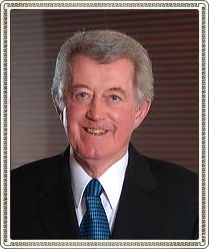

5/2/10: The State of the Fractional Interest Real Estate Market with Dr. Dick Ragatz

Unless you’ve been living off planet, you know that the real estate world has changed dramatically in the last few years.  Why?  Because financing as we came to know and love it has all but disappeared.  But does that mean people have stopped wanting to buy real estate?  Of course not!

The idea of fractional (not “fractured”, though many underwater property owners may feel that way) ownership isn’t new.  It’s a proven structure which is often used to allow people the opportunity to enjoy the use and ownership of resort properties.  But it’s also a great technique for building a diverse portfolio of investment property.  And of course, you can combine resort property and your investment goals in what we call Lifestyle Investing.  That’s one of our FAVORITE ways to invest!

We think market conditions are ripe for more people to consider fractional structures. So we decided it would be a good idea to talk to one of the biggest brains on the subject, Dr. Dick Ragatz.  Anytime you call someone “doctor”, you know they’re pretty smart.

Dr. Ragatz has a Master’s degree from the University of California at Berkeley and a Ph.D. in City and Regional Planning from Cornell.  He taught Housing Market Analysis at Cornell and also at the University of Oregon.  He’s been an active participant and leader in many industry trade groups including the American Society of Planning Officials, the American Institute of Planner, the American Institute of Certified Planners, and our personal favorite, the American Resort Development Association (ARDA).  He won awards for outstanding contributions from ARDA in 1989, 1995 and 2006.

We could go on and on, but you get the point.  He’s a really smart and accomplished guy, the kind you would want to sit down and talk real estate with.  So, since you couldn’t do that yourself, we did it for you!

Check out this very informative interview with this highly intelligent industry leader.  Get the inside scoop on what’s happening in one of the most interesting segments of the ever-changing real estate industry, courtesy of The Real Estate Guys Radio Show!  You’re welcome.   ;-)

Listen Now

Don’t miss a show!  Subscribe to the Free Podcast

Want More?  Sign Up for The Real Estate Guys Free Newsletter!

Squish Happens

Most people believe bubbles “burst”.  When people talk about the decline of tech stock values at the turn of the century, they say “the tech bubble burst”.  Of course, lately it’s all about the “real estate bubble” bursting.  Over the last two years, The Real Estate Guys™ have taken some criticism over one of our TV shows where we said, “Real estate bubbles don’t burst”.

But we’ll stand by that.  Bubbles don’t burst – at least not as long as whatever is underneath them is real.  And there isn’t much that’s more real than real estate.

So we say bubbles are squishy.  In fact, the term “bubble” (in the context of referring to a rapid run up of prices) is really a misnomer.  Better to say “balloon”.

When you squeeze a balloon, it squishes.  It comes out the sides or goes between your fingers; it just finds someplace else to go.

So you’ve heard that real estate prices have dropped.  There’s deflation.  Equity is gone.  Everyone’s underwater.  Life as we know it is over.  It’s real estate Armageddon.

Then you see (like we did) today’s Wall Street Journal article, “Hong Kong Land Sale Raises Worry of a Bubble”.

A bubble?  Didn’t it burst?

Well, no.  Actually, it squished.

According to the Wall Street Journal:

“Government officials here (Hong Kong) grapple with how to cool off overheating property prices”.

When’s the last time you heard “overheating” and “property prices” in the same sentence?  It almost seems like an oxymoron, like “reliable copier”.

Here’s another excerpt:

“The big (land purchase) came after (the real estate developer) sold 900 apartment units in a major new residential complex over the weekend for a total of  US$541 million.”

If you do the math, that’s over $600K per unit!  In ONE weekend.  We haven’t seen THAT in the US for awhile.

More…

“In China…home prices have risen as much as 25% in the past year and land values have doubled.”

That’s this past year, as in 2009.  You know, when US prices were in their third year of decline.

Now, consider where much of the money that fueled the US real estate bubble came from.  Get it?

The bubble squished.  But if your perspective is too narrow, you might think it burst.  Especially because that’s what everyone says.  And if you think bubbles burst, then you will quit the game and hide in your FDIC insured bank account.  Meanwhile, as the dollar crashes, you’re savings become worth less and less.

We have two main points:

First, real estate is an asset class unlike any other.  It’s real (permanent).  Gold and other commodities can also make this claim so, in and of itself, being real doesn’t make real estate utterly unique as an investment.

But, unlike virtually every other investment, real estate’s value is not universal.  Real estate values vary by markets and sub-markets, and those markets are global as we can clearly see.

Compare that to gold, which is also real.  If an ounce of gold is selling for $1200, it’s the same price all over the world.  There’s no squish, except to another asset class.

To really look at it right, you can’t think of real estate as an asset class.  You almost have to think of each property, or at least each market or sub-market, as an asset class.  So when one is down, another is up.  Squish.  Like stocks and bonds, gold and the dollar, etc.

But the big thing (our FAVORITE) that makes real estate unique, is that it can be financed with bank or private funding and debt serviced by tenants.  This makes it VERY conservative when structured properly.  Why?  Because even if the property declines in value, as long as it produces enough net operating income to amortize the loan (meaning the tenants are paying down your loan) some day it will be paid off.  Then it just generates cash flow forever.  That’s a beautiful thing.  Form that perspective, squish doesn’t matter that much.

Our second main point is that right now many people are forming new financial paradigms as a result of what they’re seeing and experiencing.  The people who lived through the Great Depression came out of it with very powerful convictions about how they viewed and handled money.  There were many great attitudes such as frugality, saving; and loyalty and appreciation for the opportunity to work.  We would all be better off by adopting these attitudes.

However, many of those same people missed out on some of the greatest opportunities in modern history because they brought a lot of fear and rigidity out of the trauma of the Depression.  Many people were hyper-conservative.

To be clear, we aren’t suggesting anyone should take risks they aren’t comfortable with.  And we aren’t criticizing anyone’s personal investment philosophy – no matter how conservative it might be.  We’re certainly more cautious about the risks we take these days.

We are merely suggesting to be mindful of the temptation to be hyper-conservative in terms of your willingness to be an investor.  If you won’t invest in your education or take time to investigate opportunity, you’ve probably decided “investing is too risky” and have effectively quit.  You think the bubble burst, the game is over, and there is no opportunity.  Or it’s so far off or you’re so out of position that you’re on investing sabbatical.   This is probably not you, or you wouldn’t be reading a blog like this.  But, there are lots of people who have quit – or are in various stages of quitting.  Make sure you know who you are and that you’re honest about it.

Now is a great time to be getting started (or re-started).  Talk to the people you know about real estate investing and see what they say – and watch what they do.  How are their attitudes changing as a result of the last three years?  What’s their game plan going forward?  Ask yourself those same questions.

Remember, squish happens.  As an investor, you want to pay attention to the flow of capital and try to be on the right side of squish.  And since you know squish happens, be sure to structure your deals to survive if you’re on the wrong end of it.   We’ll be talking more about this in the future.

Most of all, make sure you take the right lessons out of this Great Recession.  The right lessons are those that make you a better investor, not those that push you back to being merely a saver or a non-participating observer.  Invest in your education.  Investigate and evaluate opportunities.  Keep your head in the game, even if you’re on the sideline temporarily.

We’d love to hear from you!  Use our feedback page to tell us how this recession has affected your investing philosophy and strategy.  What are the people around you saying and doing?  Where do you see opportunity and why?  What are you doing to broaden your horizon, increase your education and increase your network?

12/13/09: Ask The Guys – What’s On Your Mind?

What is the meaning of life?  Why did God create flies?  How many little styrofoam balls in a bean bag chair?  These are just some of the many questions that The Real Estate Guys will never answer.  Fortunately, our listeners have sent in much better questions!  To provide irrefutable answers to our listeners’ real estate questions, we decided to the gather together the world’s most brilliant minds.  But since they weren’t available, we decided to take a stab at it ourselves.

The professional pontificators in studio for today’s show:

  • Your illustrious host, Robert Helms
  • Financial philosopher, Russell Gray
  • The Godfather of Real Estate, Bob Helms

Answering your questions is one of our favorite things to do.  But because we want to keep our broadcasts topical and focused, we typically don’t take calls.  Instead, we gather up questions during the week(s) and look for common themes.  Then, we dedicate a show to sharing our ideas and opinions on a few select questions.  For this broadcast we addressed the following topics:

  • Is it dangerous and dumb to buy an out of area property without seeing it first?  Is there a way to do it safely?
  • What should I so with my negative equity / negative cash flow rental property?
  • What do you think about the investment opportunities in Southern California real estate?
  • I’ve been studying real estate for two years, but haven’t bought anything because I’m afraid of making a mistake. What should I do?

Listen

Have a question you want The Real Estate Guys to answer?  Send it to us at Ask The Guys!

Don’t miss a show! Subscribe to the Free Podcast

Want More?  Sign Up for The Real Estate Guys Free Newsletter!